
What is the best flow meter for wet compressed air?

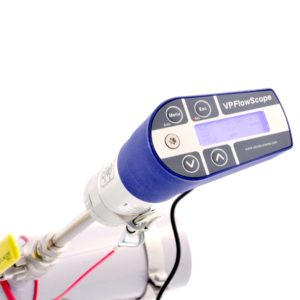
A practical guide to choosing the right flow measurement technology
Choosing the right flow meter in compressed air systems is not just a technical decision. It directly impacts energy efficiency, maintenance costs, and the reliability of your data. While VPInstruments thermal mass flow meters are highly effective in many situations, there are specific conditions where they are simply not the best choice.
This article helps you understand when alternative technologies may be more suitable, especially at the supply side of compressed air systems. Instead of focusing purely on technology, we look at real-world conditions and how they affect measurement performance.
Understanding where problems occur: the supply side
Compressed air systems consist of three main areas: generation, distribution, and end use. Each area has its own measurement challenges, but the most difficult conditions are typically found directly after the compressor.
At this point in the system, the air is often hot, wet, and unstable. This creates a challenging environment for any flow measurement technology and increases the risk of inaccurate data.
Why wet compressed air creates unreliable measurements
Air at the compressor discharge is rarely ideal for measurement. It often contains moisture, oil residues and experiences rapid temperature changes.
In practice, this means you are dealing with:
- Condensate and moisture in the airflow
- Oil contamination from the compressor
- Temperature fluctuations
- Turbulent and unstable flow profiles
In addition, turbulence caused by bends, valves and varying loads makes flow profiles even more unstable. Check out our piping table to learn the influence of piping elbows and other piping designs on the flow turbulence.
These factors make it difficult for any flow meter to perform consistently. Even technologies designed for wet air can struggle depending on installation conditions and system behavior.
When alternative technologies make more sense
Different flow meter technologies handle these conditions in different ways. Choosing the right one depends on your measurement goal.
-
Vortex flow meters
Vortex meters can handle wet air relatively well and are robust in harsh environments. However, their limited measurement range makes them less suitable for detecting low flows, leakage or part-load performance. They are mainly useful when monitoring stable, higher flow conditions.
-
Differential pressure flow meters
Differential pressure systems, like the VPFlowScope DP are widely used and flexible, but highly dependent on correct installation. They require sufficient straight pipe length and are sensitive to contamination. In practice, this makes them less reliable in compact compressor rooms where ideal installation conditions are rarely available.
-
Orifice and venturi solutions
Both technologies rely on pressure loss to calculate flow. This means they introduce continuous energy loss into the system. While venturi tubes can provide accurate results, they are often too large and expensive for practical industrial use. Orifice plates are generally not recommended due to their negative impact on efficiency.
-
Ultrasonic flow meters
Ultrasonic meters are useful when non-intrusive installation is required. However, their performance strongly depends on pipe condition and installation quality. In wet compressed air systems, contamination and condensate can reduce signal reliability.
When thermal mass flow meters are not the best choice
Thermal mass flow meters perform best in clean and dry gas conditions. At the compressor discharge, the presence of condensate can affect the sensor, leading to measurement deviations and increased maintenance requirements.
This does not mean the technology is unsuitable, but it does mean that placement is critical.
Where thermal mass flow meters deliver the most value
For most applications, the optimal location for thermal mass flow meters is after air treatment. At this point, the air is filtered, dried and thermally stable.
This provides several clear advantages:
- Stable and reliable measurement conditions
- Accurate readings across a wide flow range
- Strong performance at low flows
- Reduced maintenance requirements
- Better insights into energy efficiency
This results in more reliable measurements, lower maintenance and better insights into system performance. It also aligns with ISO 11011 recommendations for energy efficiency assessments.
Technology comparison at a glance
| Technology | Suitable for wet air | Low flow detection | Installation complexity | Energy impact |
|---|---|---|---|---|
| Vortex | Good | Limited | Moderate | Low |
| Differential pressure | Good | Moderate | High | Low |
| Orifice | Moderate | Poor | Moderate | High |
| Venturi | Good | Moderate | High | Low |
| Ultrasonic | Variable | Moderate | High | None |
| Thermal mass | Poor (wet air) | Excellent | Low | None |
Conclusion
No flow meter is suitable for every situation. At the compressor discharge, harsh conditions can limit the performance of thermal mass flow meters. In these cases, alternative technologies may be more appropriate depending on your objectives and installation constraints.
However, for most compressed air optimization projects, the best strategy remains simple: measure where conditions are stable. This ensures accurate data, reliable insights and better decision-making.
Are you not sure which technology fits best for your application, contact us any time for an open conversation, no strings attached.

 中国 (简体中文)
 UK (English)

