中国 (简体中文)
 UK (English)
 ES (Espanol)
 FR (Francais)
 DE (Deutsch)
 NL (Nederlands)
Dew point sensor for effective humidity control in industry

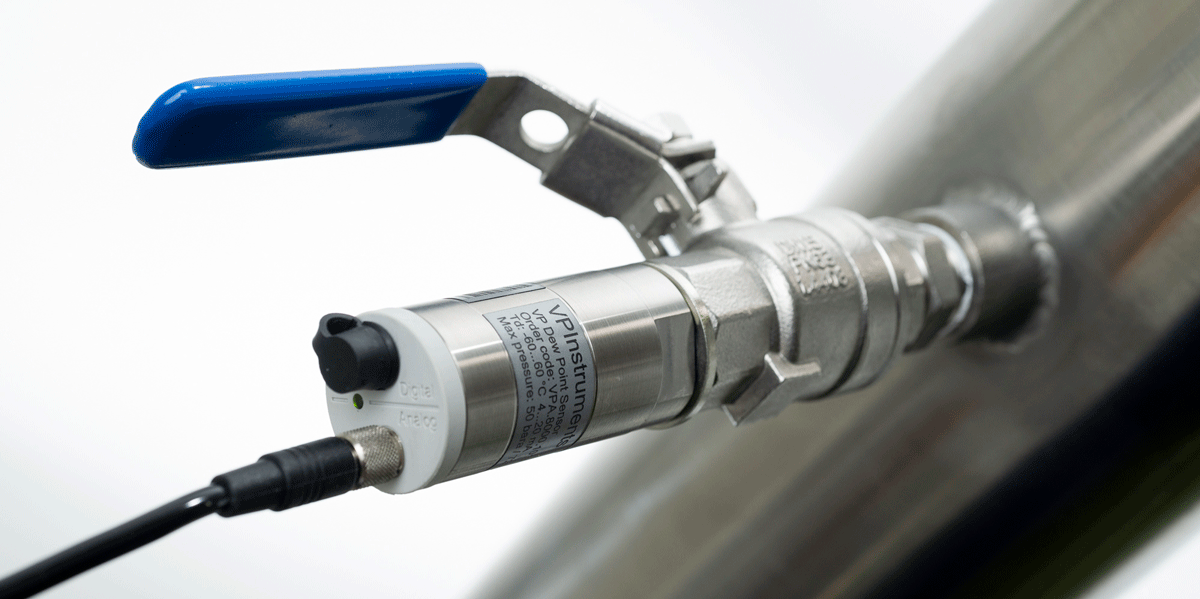
An accurate dew point sensor is essential for reducing maintenance costs and even avoid product loss in various industrial applications. Energy and plant managers, along with maintenance engineers, face the challenge of managing compressed air systems effectively while ensuring compliance with industry standards like ISO 50001. Implementing the right monitoring technologies can lead to significant energy savings and operational efficiencies.
Why the dew point matters in industrial applications
Understanding dew point is crucial because it directly affects the quality of products and processes across sectors such as food, automotive, and pharmaceuticals. Studies show that proper humidity control can enhance efficiency by 10–20% and potentially reduce energy costs by 10–50%. Therefore, investing in a dew point monitoring system is not just about compliance—it’s about improving ROI.
Measurement methods and placements
To effectively monitor dew point, choose the right sensor and install it in optimal locations within your compressed air system. Employing a dew point sensor like the VP Dew Point Sensor can provide real-time measurements. For accurate energy management, integrate these readings with your existing systems, such as PLCs and SCADA, for seamless data collection and analysis.
Step-by-step implementation guide
- Baseline: Assess current humidity conditions and energy consumption metrics.
- Install: Implement dew point sensors at critical control points.
- Log: Use VPVision to record data over time.
- Analyze: Regularly review data for insights on humidity impact on processes.
- Act: Modify operations based on findings to ensure continuous improvement.
- Review: Conduct periodic assessments to refine strategies.
Monitoring and key performance indicators (KPIs)
Once you’ve installed a dew point sensor, monitor key performance indicators that influence efficiency and performance . The KPI for monitoring dew point is the pressure dew point DPD. Combine this with other metrics such as energy consumption in kWh per Nm³, specific power, leak detection percentage, and pressure drop across your systems. These metrics can provide valuable insights into potential savings and operational improvements, guiding data-driven decisions.
Success stories and practical examples
For instance, a glass container manufacturing plant implemented a dew point sensor in their compressed air system, together with other energy saving measures like leak detection, this is leading to annual savings of 150,000 Euros by significantly reducing moisture-related and other defects. This back-of-the-envelope calculation is indicative of the broader potential savings achievable by incorporating such monitoring technologies.
In conclusion, leveraging a dew point sensor not only aids in compliance but also drives substantial operational and financial benefits. To explore further and see how these technologies can be integrated into your operations, consider starting with a demo or contact us for more tailored solutions.