
Energy monitoring software for compressed air ROI
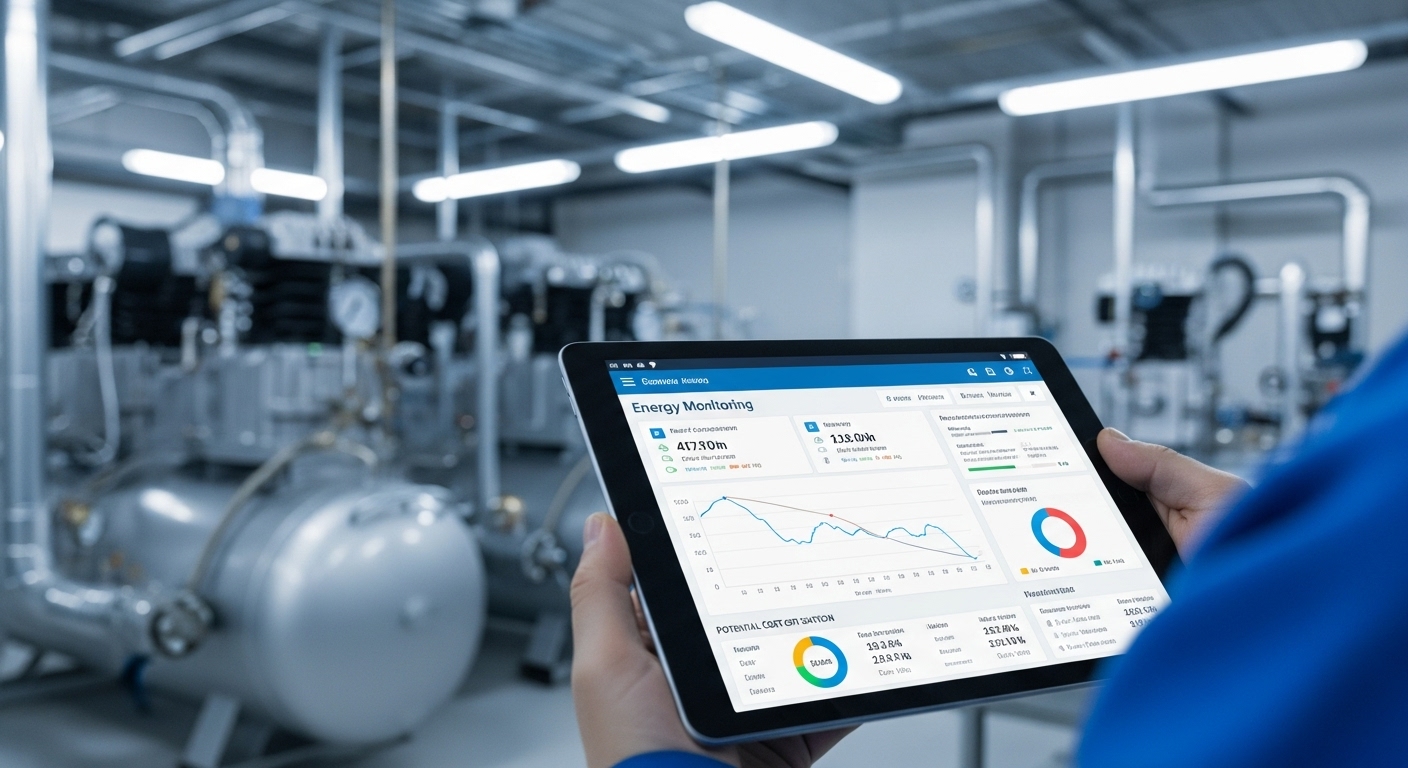
Energy monitoring software is essential if your plant runs on compressed air and technical gases, yet you are still guessing where the energy and money go. With the right tools, you can quickly see where leaks, misuse and pressure problems hide, then translate data into clear savings, CO₂ reduction and fewer production stops. For many plants, starting with plug-and-play flow, pressure and power monitoring is the fastest path to a practical energy strategy.
Energy monitoring software that speaks the language of your plant
In many factories, energy data lives in separate islands: meters from different brands, spreadsheets, and bits of information in the PLC or SCADA. This makes it hard to answer basic questions such as which production line wastes the most compressed air or how much a leak really costs per year.
Effective energy monitoring software brings this data together in one place and turns it into meaningful dashboards and alarms. When combined with robust hardware sensors on compressed air and gases, you can finally benchmark lines, shifts and products. Solutions like the VPVision energy management system are made to connect directly to flow meters, pressure sensors and kWh meters in a plug-and-play way.
Instead of forcing you into a complex IT project, modern software should use standard industrial protocols and open communication. That way it can exchange data with your existing PLC or SCADA, while still giving energy and plant managers their own clear view of performance, costs and trends.
From raw data to concrete saving actions
Data alone does not lower your energy bill. What you need is a simple path from measurement to action, supported by clear KPIs and alarms. Good software therefore helps you answer questions such as: where do we start, how big is the saving, and who needs to act.
For example, once you install flow meters on the main compressed air headers and at key production lines, you can quickly see your biggest compressed air users. Start with investigating the biggest users first; the biggest machine or the production department with the largest compressed air consumption. With software that shows this in both m³/h and cost per hour, it becomes much easier to build a business case and get management buy-in.
When you add power meters to the compressors, you can also calculate specific energy consumption (kWh per m³ of air) and compare compressor performance. This makes it clear when a compressor needs service, or when you should switch the load-sharing strategy. Over time, you create a continuous improvement loop instead of one-off audits.
Building your compressed air energy roadmap
Most energy and plant managers operate with a small, busy team. Therefore, your roadmap must be realistic and phased. You do not need to monitor everything at once. Instead, start where the savings and risk are highest, then expand step by step.
A typical roadmap for compressed air and gas monitoring looks like this. First, add flow and pressure monitoring to the main distribution headers. Upon the first insights, realize your first savings. Use these savings to invest in further instrumentation, like monitoring the compressor room with flow/pressure and power measurements so you know compressor efficiency. Third, meter critical lines or high consumers, such as blowing, packaging or furnace applications. Finally, connect the data to your reporting process for ISO 50001 or internal KPIs.
Along the way, it is useful to combine permanent monitoring with temporary audits. Portable solutions, such as mobile flow logging kits, can help you uncover issues before you commit to permanent meters. When the results are clear, it is easy to justify a fixed installation.
Integrating with existing PLC and SCADA systems
Many manufacturers hesitate to add new monitoring because they fear complex integration and long downtime. However, modern energy platforms are designed to work alongside your PLC or SCADA rather than replace them. With support for standard signals and protocols, the software can read data from existing measurement points and turn them into useful KPIs.
This approach keeps your controls team in control, while giving energy managers their own reporting layer. For instance, you can keep your PLC logic untouched and only add data collection at the sensor level. Solutions in the VPInstruments portfolio are made for this plug-and-play style of integration with minimal engineering time.
Supporting ISO 50001 and management reporting
For plants that must comply with ISO 50001 or similar schemes, traceable energy data and documented savings are essential. Energy monitoring tools therefore should not only show live values but also provide secure logging, reporting and the ability to define energy performance indicators (EnPIs). Over time, this helps you demonstrate continual improvement and makes external audits smoother.
Moreover, clear visual dashboards make it easier to communicate with finance and top management. When you can show the annual cost of leaks or unnecessary pressure in euros, decisions about investments become much quicker. For guidance on choosing the right instrumentation for such a system, explore the compressed air flow meters available from VPInstruments at flow meters.
Because compressed air is often one of the most expensive utilities in the plant, even small improvements can deliver strong ROI. If you can reduce your base load by just a few percentage points, or optimise compressor control using reliable data, the payback time for a monitoring project is usually short. To see how permanent monitoring and analytics can fit into your plant, learn more about the VPVision system at VPVision.
In conclusion, turning your compressed air system into a truly managed utility requires more than occasional leak hunts. With the right combination of sensors and energy monitoring software, you gain continuous insight, faster decisions and a clear path to lower costs and CO₂. Start by monitoring your compressor room and main headers, then expand as your team and budget allow. To take the next step, discover how VPInstruments solutions can help you build a practical, plug-and-play energy monitoring strategy for your plant.

 中国 (简体中文)
 UK (English)

