中国 (简体中文)
 UK (English)
 ES (Espanol)
 FR (Francais)
 DE (Deutsch)
 NL (Nederlands)
In line flow meter guide for efficient compressed air
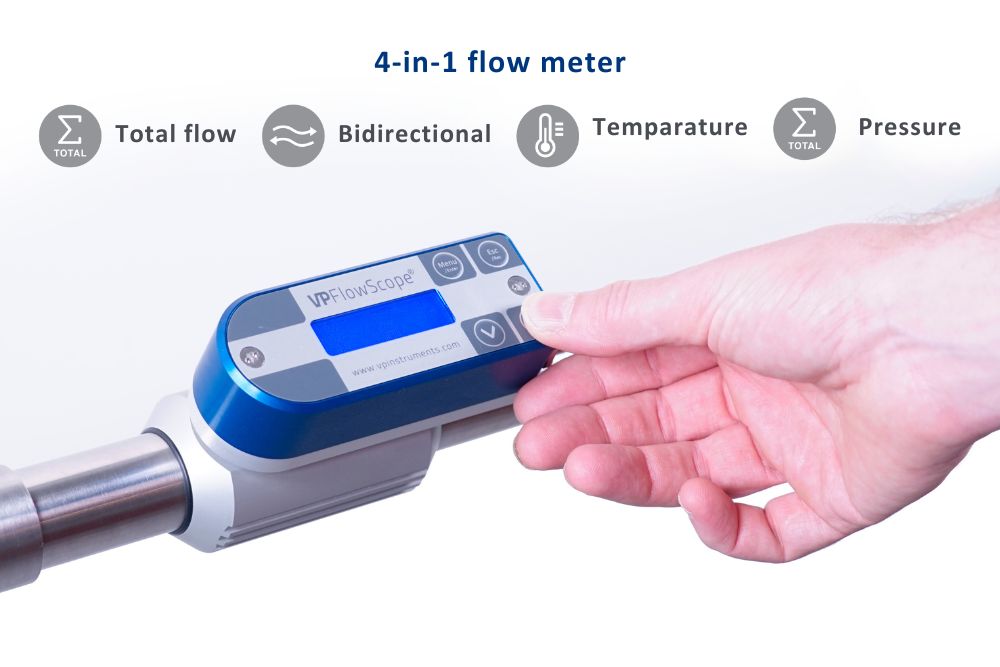
An in line flow meter can turn your compressed air and gas system into a transparent, measurable utility instead of a hidden cost centre. With the right meters in the right places, you can uncover leaks, benchmark lines, justify investments, and keep uptime high without adding complexity for your already busy team.
In line flow meter basics for compressed air and gas
An in line flow meter is installed directly in a pipe to measure the actual volume or mass of compressed air or technical gas flowing through that line. It gives stable, repeatable readings that are ideal for energy monitoring and ISO 50001 reporting.
For plant and energy managers, the value is not the flow value itself, but what you can do with it. When in line meters are connected to your PLC, SCADA, or an energy management system, they reveal where energy is wasted, where capacity is tight, and how production changes drive consumption. With solutions such as the VPVision energy management system, this data becomes clear dashboards and alerts instead of raw numbers.
In most manufacturing plants, compressed air is one of the top energy users. However, it is often under-instrumented. Therefore, adding in line meters at a few strategic locations can deliver fast savings with limited installation work.
How inline meters create energy savings and ROI
To win budget and internal support, you need a simple story: investment in metering in, savings and risk reduction out. Inline meters support this by providing hard numbers on where air and gas are used and wasted.
First, they make leaks visible. By measuring flow at the compressor room and at key distribution lines, you can compare the total produced flow versus what is actually used in production. By measuring in downtime and benchmarking over time, you can spot your leaks. Once leak repair campaigns start, you can prove the improvement with before-and-after data.
Second, inline meters reveal idle and off-shift consumption. Many plants discover that a large share of their air use occurs during evenings, weekends, or product changeovers, when no value is created. Reducing this non-productive use delivers savings without affecting output, which is an easy win for operations and finance.
Third, flow data helps you run compressors and treatment equipment more efficiently. By trending flow and pressure together, you can match compressor capacity to real demand, avoid running unnecessary machines, and delay capital expenditure on new compressors. If you are using a central energy monitoring system with alarms, you can also catch abnormal behaviour early.
Finally, inline meters support ISO 50001 by providing traceable, auditable measurements. Instead of estimates or spot checks, you get continuous data that supports energy performance indicators (EnPIs) for compressed air and gas systems.
Key selection criteria for an inline meter
Choosing the right device is essential if you want reliable data with minimal engineering effort. Below are practical aspects energy and plant managers should review with their teams.
First check the basics. What is the purpose of the measurement, combined with process data like flow, pressure, temperature range, and pipe diameter. This determines what type of flow meter you need at what accuracy.
Check also the installation location. Thermal mass flow meters typically require sufficient upstream pipe length for accurate measurements. But also think about environmental conditions like temperature, humidity, and vibration.
Don’t forget about accessibility. Not only is this handy for first installation, readout of the flow meter and wiring. But all flow meters require regular calibration. So, you need to access the flow meter over time. Selecting a flow meter that is easy to service, will save you time and money for exchanging it.
Where to place meters in your compressed air network
Smart placement usually matters more than having many meters. A typical step-by-step approach is to start with a few critical locations, then expand once the first savings are confirmed.
Measure total flow leaving the compressor room first. This provides a baseline and allows you to track overall system efficiency over time. Combine this with power measurement on the compressors to calculate specific energy consumption in kWh per normal cubic metre or per standard cubic foot.
Next, install meters on the main headers feeding separate production halls, departments, or major processes. This gives you cost allocation by area and reveals which lines have abnormal demand or leaks. Sharing this information with department managers often creates healthy competition to improve efficiency.
Finally, consider metering at large or critical consumers, such as furnaces, paint lines, packaging machines, or blow moulding lines. Here, you can link energy use to production output, calculate energy per unit produced, and justify investments in more efficient equipment.
Turning flow data into concrete actions
Data alone does not reduce your energy bill. You need simple, repeatable routines to turn readings into decisions and actions that your team can manage alongside daily production tasks.
Start with regular reviews of trend graphs for total and departmental flow. Look for patterns: rising baseline at night, unexpected peaks during cleaning or changeover, or gradual increases that signal new leaks. Define simple rules, such as investigating any 10% increase in base load within a month.
Then, link actions to responsibilities. Maintenance can own leak repair and equipment optimisation, production can ensure machines are shut down during idle periods, and energy management can update KPIs and report savings. When everyone understands how flow data supports their goals, cooperation improves.
It also helps to connect flow data to cost. By multiplying measured flow by compressor specific energy consumption and your electricity tariff, you can translate “m³ per hour” into euros per hour. This makes it much easier to defend investments and to prioritise projects in front of finance and management.
For many plants, a dedicated monitoring platform reduces manual work. Solutions like VPVision automatically collect data from meters and other sensors, then provide dashboards, alarms, and reports tailored to different roles in the company, like energy and plant managers. This reduces dependency on scarce IT and controls resources, while still integrating with existing BMS, PLC and SCADA infrastructure.
In summary, inline flow metering provides the factual basis you need to cut energy costs, lower CO₂ emissions, and maintain high uptime without guesswork. If you want to explore practical, plug-and-play options that fit industrial environments, visit our products page and see how VPInstruments can support your compressed air and gas monitoring strategy.